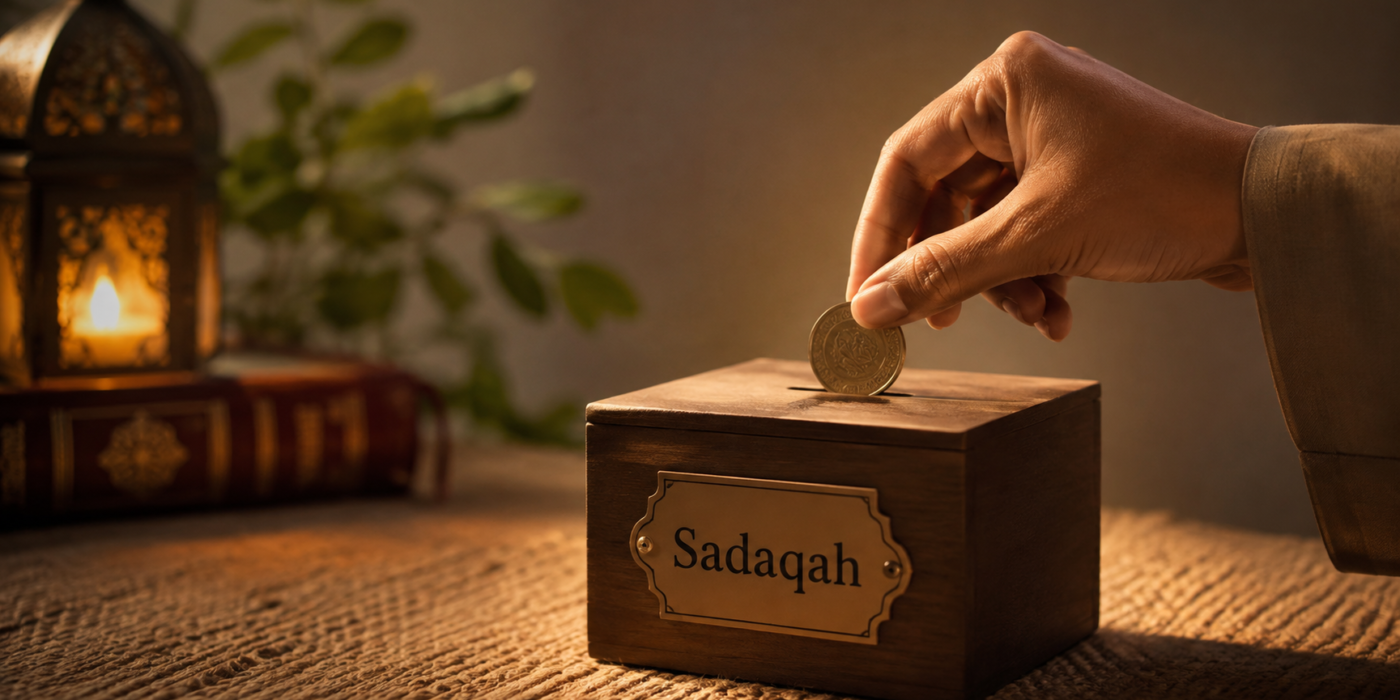
Sadaqah: Voluntary Charity in Islam and Its Reward
Zakat has rules, thresholds, and a fixed percentage. Sadaqah has none of that — which is exactly why it’s easy to underestimate. A smile, a kind word, removing a harmful object from someone’s path, and actual money given away all count as sadaqah in Islamic tradition, with no minimum amount and no calculation required.
What Is Sadaqah?
Sadaqah (صَدَقَة) is voluntary charity given purely out of generosity and sincerity — distinct from Zakat, which is obligatory, calculated, and owed specifically by those above the nisab threshold. Sadaqah has no minimum, no fixed schedule, and no restriction to specific asset types. It can be money, but it doesn’t have to be.
Sadaqah vs. Zakat — The Key Differences
| Zakat | Sadaqah |
|---|---|
| Obligatory for those who qualify | Entirely voluntary |
| Fixed rate (2.5% of qualifying wealth) | No fixed amount — any amount, or none, at your discretion |
| Restricted to 8 specific recipient categories | Can be given to almost anyone in need, including family |
| Must be money or zakatable assets | Can be money, effort, a kind word, or physical help |
Acts That Count as Sadaqah Beyond Money
A well-known hadith broadens sadaqah well past charity in the financial sense, describing several everyday acts as forms of sadaqah:
- A smile directed at another person
- Removing something harmful from someone’s path — literally, like an obstacle in a road
- Helping someone mount their transport, or lifting their belongings for them
- A good word
- Settling a dispute between two people fairly
- Every step taken walking to the mosque for prayer
This framing matters: it means someone with no money at all is never actually excluded from earning the reward of sadaqah.
The Reward Structure of Sadaqah
The Quran describes the reward for sincere charity using an agricultural image — comparing it to a single grain that grows into seven ears, each bearing a hundred grains, meaning the return can multiply far beyond the original amount given, by Allah’s decision, not a guaranteed formula.
Hadith also describes sadaqah as extinguishing sin the way water extinguishes fire — a specific, repeated image scholars point to when discussing why charity is emphasized so heavily as a path to forgiveness.
Sadaqah Jariyah — Ongoing Charity
A distinct and highly valued category is sadaqah jariyah (“ongoing” or “continuous” charity) — giving in a way that keeps benefiting people after the initial act, such as funding a well, planting a tree, building something the public uses, or contributing to knowledge that continues to help people. The reward is described as continuing to reach the giver as long as the benefit continues, even after death — among the few things a hadith describes as still benefiting a person once they’ve passed.
Public vs. Private Sadaqah
The Quran acknowledges both forms as valid: giving openly can encourage others to give as well, while giving secretly protects against showing off (riya) — the same concern covered in our piece on ikhlas. Many scholars note that private giving is often considered to carry a particular sincerity, though neither form is inherently superior in a fixed sense — intention decides that, not visibility.
Frequently Asked Questions
Can Sadaqah be given to family members?
Yes — unlike Zakat, which excludes immediate dependents, Sadaqah can be given to family, and giving to relatives in need is often specifically encouraged, sometimes described as carrying a double reward: charity, and maintaining family ties.
Is there a minimum amount for Sadaqah to count?
No. Even something as small as half a date, or a kind word with no monetary value at all, is described in hadith as valid, accepted sadaqah.
Does Sadaqah replace the obligation to pay Zakat?
No. Giving voluntary sadaqah, however generously, does not fulfill the separate, specific obligation of Zakat for those who meet its conditions — the two are not interchangeable.
Can Sadaqah be given on behalf of someone who has passed away?
Yes, giving sadaqah on behalf of a deceased person is a widely practiced and encouraged act, believed to benefit them.
Conclusion
Sadaqah’s flexibility is the point, not a loophole — it means the door to charity’s reward is open to literally everyone, regardless of income, through something as small as a kind word or moving an obstacle out of someone’s way.
See our related piece on Zakat calculation and who must pay, and browse upcoming Islamic gatherings near you.