Janazah: The Funeral Prayer in Islam and How to Perform It
Janazah is the one prayer most Muslims will perform many times in their life without ever formally learning it in advance — usually stepping into a line at a funeral, following along, hoping the person next to them knows what they’re doing. It’s short, has no bowing or prostration, and is different enough from the five daily prayers that going in unprepared is genuinely common.
What Is Janazah Prayer?
Salat al-Janazah is the funeral prayer performed collectively over a deceased Muslim before burial. It’s a communal obligation (fard kifayah) — meaning it must be performed by someone in the community, but not necessarily every individual, unlike the five daily prayers which are obligatory on each person.
Key Differences From the Five Daily Prayers
- No bowing (ruku) or prostration (sujood) — performed entirely standing
- No adhan or iqamah called beforehand
- Consists of four takbirs, with specific recitations between each, rather than rak’ahs
- The body is positioned in front of the row of worshippers, facing the same direction as the congregation (toward the Qibla)
How to Perform Janazah Prayer: Step by Step
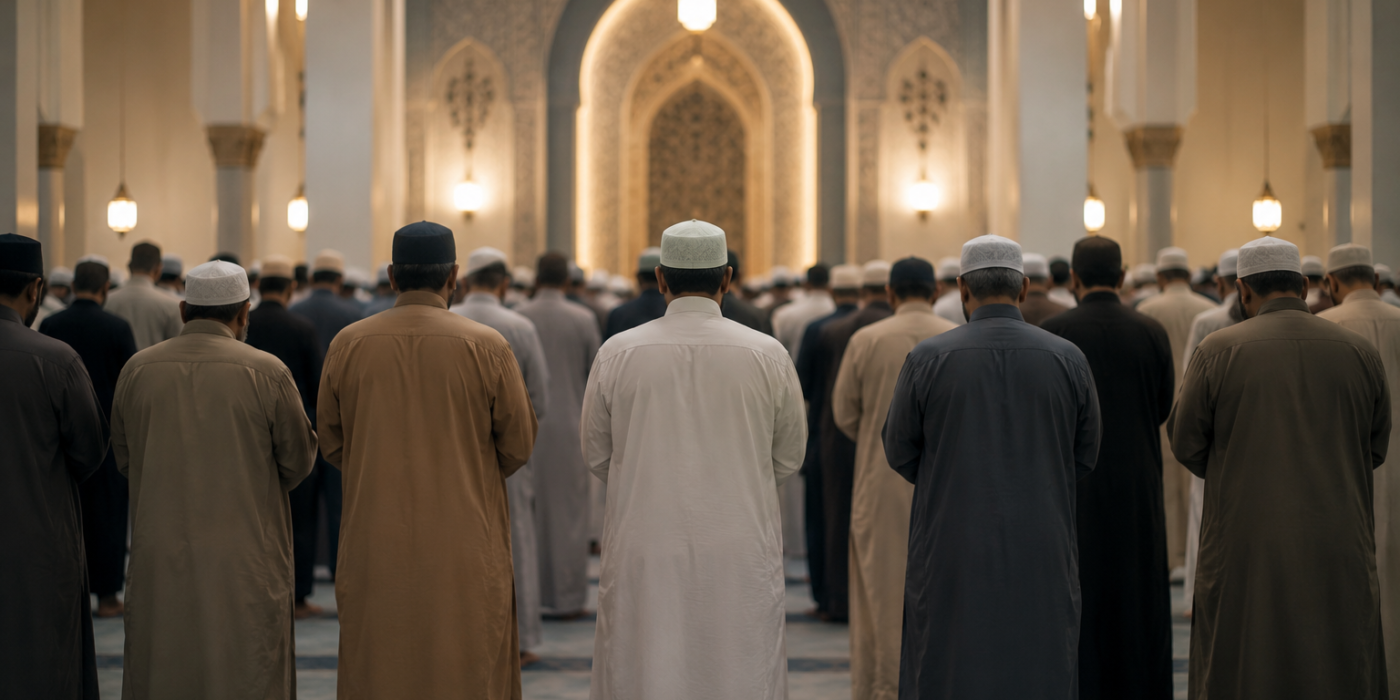
- Stand in rows behind the imam, facing the Qibla, with the deceased positioned in front, perpendicular to the rows.
- First takbir — raise the hands as in the opening of regular prayer, then recite Surah Al-Fatiha silently (according to most schools) or another opening dhikr.
- Second takbir — recite Salawat (blessings) upon the Prophet ﷺ, typically the same form recited in the daily prayers.
- Third takbir — make dua specifically for the deceased, asking for forgiveness and mercy on their behalf.
- Fourth takbir — followed by a brief pause, then
- Conclude with the Salam, turning the head right and left as in regular prayer.
There is no sitting or kneeling at any point — the entire prayer is performed standing.
The Dua Made for the Deceased
A well-known dua recited during the third takbir asks Allah to forgive the deceased, have mercy on them, pardon them, honor their place of rest, and replace their prior home with a better one — language specifically shaped around the transition from this life to the next, distinct from ordinary daily-prayer dua.
Who Leads and Who Attends?
Any adult male capable of leading prayer can lead Janazah, though it’s customary for a family member, local imam, or someone the family requests to lead. Both men and women may attend and pray, though practices around positioning (separate rows, etc.) follow the same general etiquette as congregational prayer generally.
Common Questions About Timing and Logistics
- Burial is generally prompt — Islamic practice strongly favors burying the deceased as soon as reasonably possible, without unnecessary delay.
- Janazah is not performed during specific prohibited times — similar restrictions to other prayers apply around sunrise, solar noon, and sunset, though scholars differ on exact application given the urgency of burial.
- It can be repeated for those who missed the first congregation, according to many scholars, even after burial in some cases (Salat al-Ghaib, prayer performed in absence of the body, is a related but distinct practice).
Frequently Asked Questions
Do I need wudu to pray Janazah?
Yes — the same purification requirements that apply to the five daily prayers apply to Janazah as well.
Can Janazah be prayed for someone who wasn’t Muslim?
No — Salat al-Janazah is specifically performed for deceased Muslims; other forms of respect and condolence apply for non-Muslims according to Islamic guidance.
What if I arrive late and miss part of the prayer?
Join the congregation at whatever point you arrive and follow along; scholars differ on the exact details of making up missed portions, but joining in progress is generally preferable to not praying at all.
Is Janazah prayer different for a child who has passed away?
The core structure is the same, though the specific dua recited during the third takbir differs, since it focuses on intercession and mercy rather than the direct forgiveness language used for an adult.
Conclusion
Janazah’s brevity is deliberate — no lengthy ritual, just four takbirs and focused dua, structured around the urgency and gravity of the moment rather than the longer rhythm of daily prayer. Learning it once, calmly, in advance, is far easier than learning it for the first time in the middle of a funeral line.
See our related piece on how to perform wudu, and browse upcoming Islamic gatherings near you.