Adhan: The Call to Prayer, Its Meaning, and How to Respond
Five times a day, in cities and villages across the world, the same words ring out from mosque loudspeakers within minutes of each other — not because it’s coordinated centrally, but because the adhan has followed the same wording and structure for over 1,400 years. It’s one of the most recognizable sounds in the world, and yet most people who hear it daily have never learned what each line specifically calls people to.
What Is Adhan?
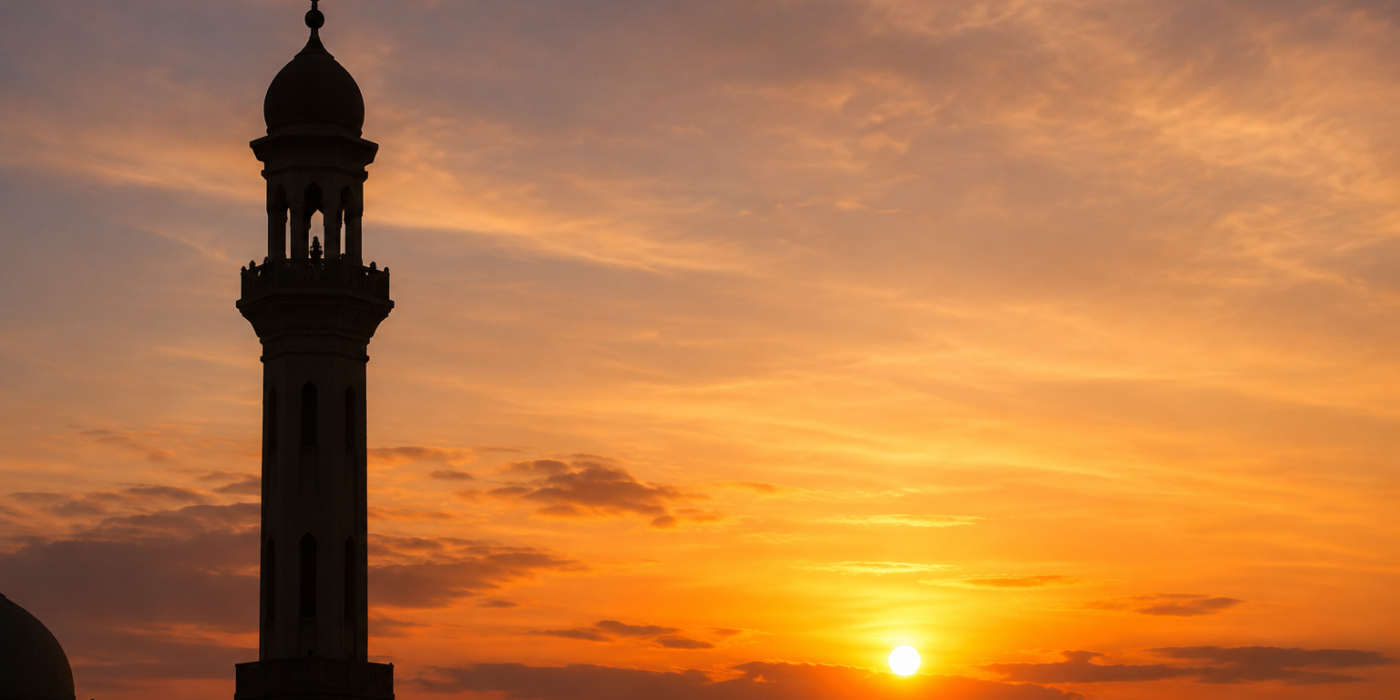
Adhan (أَذَان) is the call to prayer, announced before each of the five daily prayers to inform the community that the prayer time has begun. It’s traditionally called by a muezzin, often from a mosque’s minaret or, today, its speaker system.
The Words of the Adhan and What They Mean
| Arabic (transliteration) | Meaning | Repeated |
|---|---|---|
| Allahu Akbar | Allah is the Greatest | 4 times |
| Ash-hadu an la ilaha illallah | I bear witness there is no god but Allah | 2 times |
| Ash-hadu anna Muhammadan Rasulullah | I bear witness Muhammad is the Messenger of Allah | 2 times |
| Hayya ‘ala as-salah | Come to prayer | 2 times |
| Hayya ‘ala al-falah | Come to success | 2 times |
| As-salatu khayrun min an-nawm | Prayer is better than sleep (Fajr adhan only) | 2 times |
| Allahu Akbar | Allah is the Greatest | 2 times |
| La ilaha illallah | There is no god but Allah | 1 time |
The line “Prayer is better than sleep” is added specifically and only in the Fajr (dawn) adhan — a detail many people notice without knowing why it appears at that one prayer and not the other four.
Adhan vs. Iqamah — Two Different Calls
The adhan announces that the prayer time has started, giving the community time to prepare and gather. The iqamah is a second, shorter call made immediately before the prayer actually begins, once the congregation is ready to stand and pray — essentially, adhan says “it’s time,” iqamah says “we’re starting now.”
How to Respond to the Adhan
Hearing the adhan carries its own recommended etiquette:
- Repeat each phrase silently or quietly after the muezzin, matching the words — except for “Hayya ‘ala as-salah” and “Hayya ‘ala al-falah,” where the response is instead “La hawla wa la quwwata illa billah” (there is no power or strength except through Allah).
- Send blessings on the Prophet ﷺ after the adhan finishes.
- Make dua — the time between the adhan and iqamah is specifically described in hadith as a time when dua is not rejected, as covered in our dua article.
Why the Adhan Matters Beyond Just Timing
Beyond its practical function, the adhan is understood as a public declaration of faith itself — the Shahada is embedded directly in its wording, meaning every adhan called is, in effect, a public proclamation of Islam’s core belief, five times a day, regardless of whether anyone actually prays in response.
Frequently Asked Questions
Why does the Fajr adhan have an extra line?
“Prayer is better than sleep” is added specifically at Fajr as a reminder given the natural difficulty of waking for the dawn prayer — a detail tied directly to that prayer’s timing, not included in the other four.
Can anyone call the adhan?
Traditionally, a respected, capable person is chosen (a muezzin), though there’s no strict requirement limiting who may call it, provided it’s done correctly and respectfully.
Do I have to stop what I’m doing when I hear the adhan?
It’s recommended to pause and respond to the adhan when reasonably possible, though it isn’t an absolute obligation to halt every activity mid-task — responding when convenient is the general guidance.
Is the adhan the same in every country?
The core wording is the same everywhere, though minor regional and school-of-thought variations exist in phrase repetition and specific additions, particularly around the Shia and Sunni traditions.
Conclusion
The adhan is easy to hear as background noise after enough repetition — but its wording is, word for word, the same declaration of faith covered in our piece on the four Kalimas, called out publicly five times a day, inviting a response rather than just marking time.
Check your local Namaz Times for accurate prayer timings in your city, and browse upcoming Islamic gatherings near you.