Hajj in Islam: Meaning, Core Rites, and Who Must Go
Of the five pillars of Islam, Hajj is the only one that isn’t required of every capable Muslim every year — it’s required once in a lifetime, and only for those who genuinely have the means. That single condition, “if able,” changes how the entire pillar should be understood.
What Is Hajj?
Hajj is the pilgrimage to Makkah, performed during a specific window in the Islamic month of Dhul-Hijjah. It’s the fifth pillar of Islam and obligatory once in a lifetime for every Muslim who is physically and financially able to undertake it, and for whom the journey is safe.
Who Is Required to Perform Hajj?
The Quran specifies the condition directly: Hajj is owed to Allah by those “who are able to make the journey.” This condition (istita’ah) is understood by scholars to include:
- Financial capability — able to cover the cost without going into debt or depriving dependents
- Physical capability — healthy enough to undertake the physical demands of the rites
- Safe passage — the route and destination must be reasonably safe
- For women, a mahram or safe travel arrangement, according to the majority of scholarly opinion
Someone who never meets these conditions in their lifetime is not sinful for not performing Hajj — the obligation is explicitly conditional, not universal.
The Core Rites of Hajj, Briefly
- Ihram — entering a sacred state at designated points, marked by specific plain garments for men and a state of intention and restriction for all pilgrims.
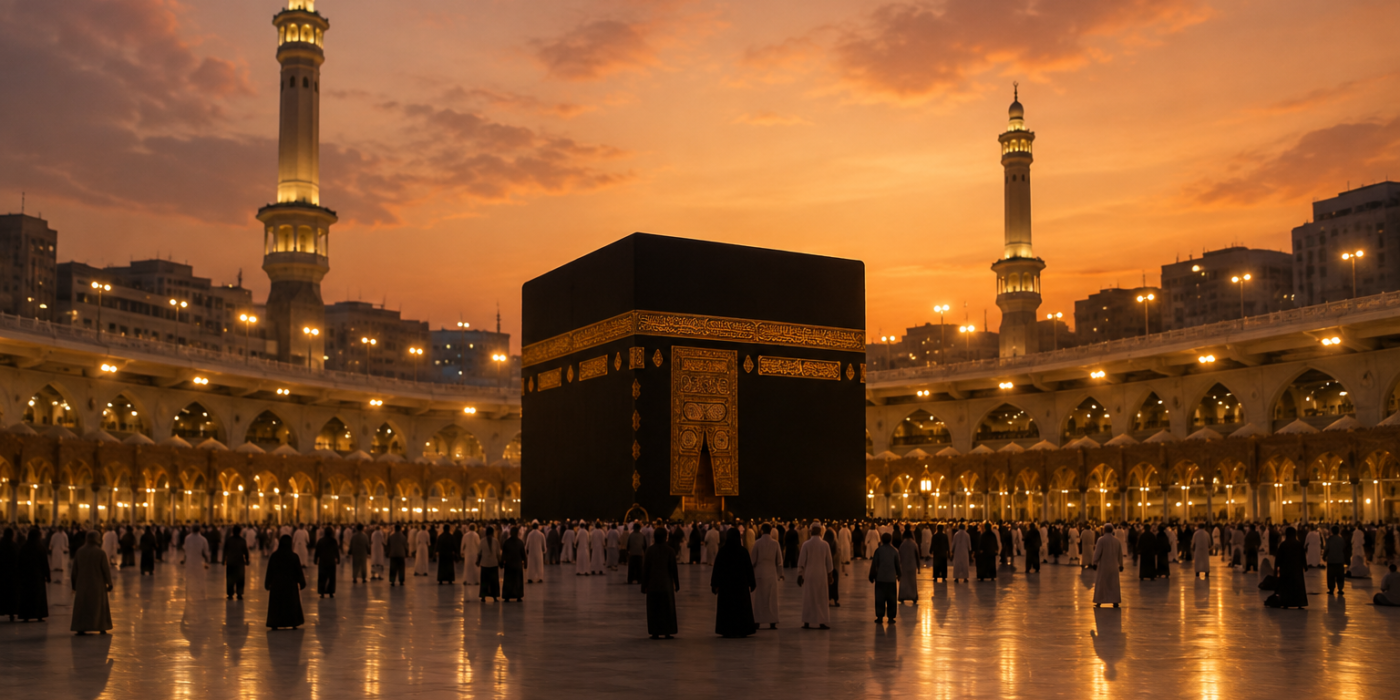
- Tawaf — circling the Kaaba seven times.
- Sa’i — walking between the hills of Safa and Marwah seven times, commemorating Hajar’s search for water for her son Isma’il.
- Standing at Arafat — widely considered the single most essential rite; a hadith states plainly that “Hajj is Arafat.”
- Muzdalifah and the stoning at Mina — symbolic rejection of Shaytan’s whispers, tied to the story of Ibrahim (peace be upon him).
- Sacrifice (Qurbani) — commemorating Ibrahim’s willingness to sacrifice his son in obedience to Allah.
- Final Tawaf before departure.
Hajj vs. Umrah — What’s the Difference?
| Hajj | Umrah |
|---|---|
| Obligatory once in a lifetime (if able) | Voluntary, recommended |
| Performed only during specific days in Dhul-Hijjah | Can be performed any time of year |
| Includes standing at Arafat, Mina, Muzdalifah | Limited to Tawaf and Sa’i, with Ihram |
| One of the Five Pillars of Islam | Not a pillar, though highly rewarded |
Why Hajj Is Emphasized So Heavily
A well-known hadith states that an accepted Hajj (Hajj Mabrur) has no reward less than Paradise itself — among the strongest rewards attached to any single act of worship in Islamic tradition. It’s also described as returning a person to a state as pure as the day their mother gave birth to them, provided it was performed without sin or dispute along the way.
Common Misconceptions About Hajj
- “I have to go into debt to fulfill this obligation.” Incorrect — the condition of financial capability specifically excludes anyone who would need to borrow or neglect their dependents’ needs to perform it.
- “Hajj and Umrah are the same thing.” They share some rites but are distinct in scope, timing, and religious status, as outlined above.
- “Once is never enough; I should keep going every year if I can.” The obligation itself is only once; additional Hajj is voluntary and rewarded, but not required, and many scholars note the same money could serve other obligations or needs first.
Frequently Asked Questions
What happens if I can never afford Hajj?
There is no sin in not performing Hajj if you never genuinely meet the conditions of ability — the obligation is explicitly tied to capacity, not a fixed universal requirement.
Can someone perform Hajj on behalf of a deceased relative?
Yes, under specific conditions — typically when the deceased person had the ability and intention to perform Hajj but passed away before doing so. This is a detailed fiqh matter worth discussing with a knowledgeable scholar for a specific situation.
Is Hajj different for men and women?
The core rites are largely the same, with some differences in Ihram clothing requirements and additional travel considerations for women, according to majority scholarly views.
Conclusion
Hajj’s “once in a lifetime, if able” structure is deliberate — it’s one of the few pillars of Islam explicitly built around genuine capacity rather than a flat universal requirement, which makes worrying about it prematurely, before ever having the means, largely unnecessary.
See our related pieces on Zakat and Sadaqah, and browse upcoming Islamic gatherings near you.