Sawm: Ramadan Fasting in Islam — Rules, Exemptions, and What Breaks It
Every fast we’ve covered on this site so far — the White Days, Ashura — has been voluntary. This one isn’t. Sawm, fasting during the month of Ramadan, is the fourth pillar of Islam, obligatory on every adult Muslim who is physically able, and it’s the one pillar tied to an entire month rather than a single act.
What Is Sawm?
Sawm (صَوْم) means “to abstain” or “to refrain.” In the context of Ramadan, it refers to abstaining from food, drink, and marital relations from before dawn (Fajr) until sunset (Maghrib), every day throughout the month, as an act of worship commanded directly in the Quran.
Who Must Fast?
Fasting Ramadan is obligatory for every Muslim who is:
- An adult (having reached puberty)
- Of sound mind
- Physically able to fast without serious harm
- Not traveling, ill, menstruating, or pregnant/nursing in a way that fasting would cause harm (each of these has a specific ruling, covered below)
Who Is Exempt — and What Happens Instead
| Situation | Ruling |
|---|---|
| Illness (temporary) | Exempt; make up the missed days later |
| Travel | Exempt; make up the missed days later |
| Menstruation | Fasting is not valid during this time; make up the missed days later |
| Pregnancy/breastfeeding, if fasting risks harm | Exempt; make up later, according to majority view |
| Old age or chronic illness with no expectation of recovery | Exempt from fasting; feed a poor person instead (fidyah) for each missed day |
| Children (pre-puberty) | Not obligated, though many are encouraged to practice gradually |
What Breaks the Fast?
- Eating or drinking intentionally
- Intentional vomiting
- Marital relations
- Intentionally taking anything into the body through the mouth or nose in a way that reaches the stomach
Accidentally eating or drinking (forgetting the fast entirely) does not break it according to the majority of scholars — the person is instructed to simply stop and continue fasting once they remember.
The Daily Structure of Fasting
- Suhoor — a pre-dawn meal before Fajr, recommended though not obligatory, described by the Prophet ﷺ as containing blessing.
- The fast itself — from Fajr until Maghrib, abstaining from food, drink, and the other restrictions above.
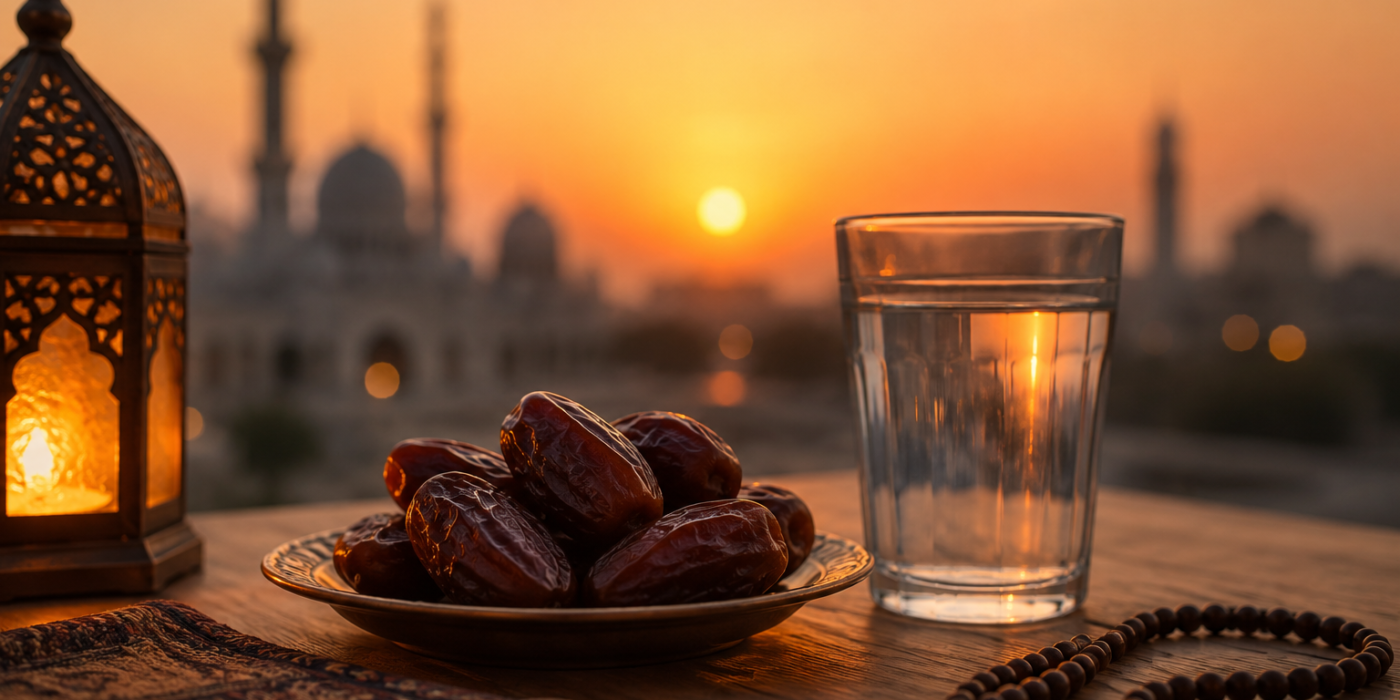
- Iftar — breaking the fast at Maghrib, traditionally with dates and water, following the Prophet’s ﷺ reported practice.
Check your local Namaz Times for exact Fajr and Maghrib times in your city, since suhoor must end and iftar must begin at these specific points.
Why Fasting Is Emphasized So Heavily
The Quran states the purpose directly — that fasting is prescribed so that believers may attain taqwa (God-consciousness). Beyond the spiritual purpose, hadith describe specific rewards: fasting is described as a shield, and the one who fasts is promised that their reward will be given directly and generously by Allah, described in one hadith as being unlike other deeds in this respect.
Common Misconceptions About Fasting
- “Any illness excuses fasting.” Only illness where fasting would cause genuine harm or significantly worsen the condition qualifies — minor discomfort doesn’t meet the threshold, according to most scholars.
- “Missing days means starting the makeup fasts from scratch, in order.” Makeup days (qada) don’t need to be consecutive or completed before the next Ramadan in a fixed sequence, though delaying without reason is discouraged.
- “Brushing your teeth or using eye drops breaks the fast.” Scholars differ on some of these specific details, but many everyday actions people assume break the fast — like unintentionally swallowing water while showering — don’t, provided nothing is intentionally consumed.
Frequently Asked Questions
What if I forget I’m fasting and eat something?
According to the majority view, this does not break the fast — you simply stop eating once you remember and continue the fast as normal.
Can I make up missed Ramadan fasts any time of year?
Yes, generally any day outside the days when fasting is prohibited (Eid days), though it’s recommended not to delay unnecessarily into the next Ramadan.
Is fasting required for travelers?
Travelers are explicitly exempted in the Quran, with the option to fast anyway if it isn’t difficult, or to make up the days later — the choice is the traveler’s.
Does fasting mean avoiding all forms of self-improvement talk or entertainment?
Fasting’s core requirement is abstaining from food, drink, and marital relations during daylight hours — broader behavioral restraint (avoiding gossip, anger, etc.) is strongly encouraged as part of the spirit of the fast, though it doesn’t invalidate the fast itself if violated.
Conclusion
Sawm is the one pillar that asks for sustained restraint across an entire month rather than a single act — and its exemptions are built with real compassion for illness, travel, and physical need, not as loopholes but as part of the same law that made fasting obligatory in the first place.
Check your local Namaz Times for accurate Fajr and Maghrib timings, and see our related piece on the White Days voluntary fasting.