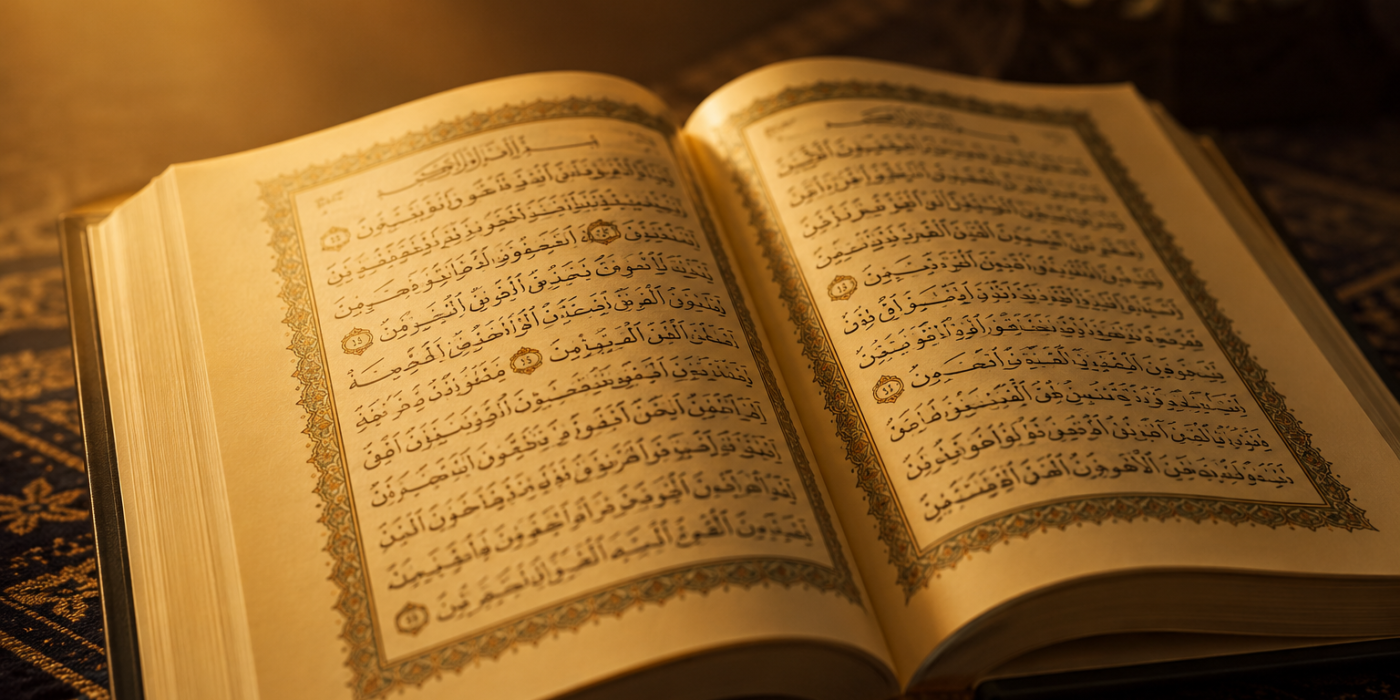
Surah Al-Fatiha: Meaning, Translation, and Why It’s Required in Every Prayer
It’s recited at least 17 times a day by every praying Muslim — more, counting voluntary prayers — and yet Surah Al-Fatiha rarely gets discussed on its own, outside of memorization. It’s short enough to learn in one sitting and dense enough that entire volumes of tafsir have been written on its seven verses alone.
What Is Surah Al-Fatiha?
Al-Fatiha (الفاتحة), “The Opening,” is the first surah of the Quran and the only surah recited in full during every single unit (rak’ah) of the five daily prayers — no prayer is considered valid without it, according to the vast majority of scholarly opinion. It consists of seven short verses.
The Text and Meaning
بِسْمِ اللَّهِ الرَّحْمَٰنِ الرَّحِيمِ
In the name of Allah, the Most Gracious, the Most Merciful.
الْحَمْدُ لِلَّهِ رَبِّ الْعَالَمِينَ
All praise is due to Allah, Lord of all the worlds.
الرَّحْمَٰنِ الرَّحِيمِ
The Most Gracious, the Most Merciful.
مَالِكِ يَوْمِ الدِّينِ
Master of the Day of Judgment.
إِيَّاكَ نَعْبُدُ وَإِيَّاكَ نَسْتَعِينُ
You alone we worship, and You alone we ask for help.
اهْدِنَا الصِّرَاطَ الْمُسْتَقِيمَ
Guide us on the straight path.
صِرَاطَ الَّذِينَ أَنْعَمْتَ عَلَيْهِمْ غَيْرِ الْمَغْضُوبِ عَلَيْهِمْ وَلَا الضَّالِّينَ
The path of those You have blessed, not of those who have earned Your anger, nor of those who have gone astray.
Why It’s Called “The Opening”
Al-Fatiha opens the Quran in written order, but its significance goes beyond position. It’s also known by other names in Islamic tradition, including “Umm al-Kitab” (the Mother of the Book) and “Al-Sab’ al-Mathani” (the Seven Oft-Repeated Verses) — both names pointing to its foundational role, summarizing themes that recur across the entire Quran: praise of Allah, His mercy, accountability, worship, and guidance.
The Structure: A Conversation With Allah
A well-known hadith qudsi (a saying in which Allah speaks in the first person through the Prophet ﷺ) describes Al-Fatiha as split between Allah and His servant, with Allah responding to each verse as it’s recited. The first three verses are praise, belonging to Allah; the middle verse (“You alone we worship…”) is shared; and the final three verses are the servant’s request, to which Allah responds “This is for My servant, and My servant shall have what he asked for.” This framing is part of why Al-Fatiha isn’t just recited — it’s understood as a dialogue.
Key Themes in Al-Fatiha
- Tawheed (Oneness of Allah): Establishing Allah as the sole Lord of all creation from the second verse onward.
- Mercy: Ar-Rahman and Ar-Raheem appear twice within seven verses — once in the basmala, once again immediately after — emphasizing mercy as central to how Allah is approached.
- Accountability: “Master of the Day of Judgment” ties worship directly to eventual accountability, not disconnected from it.
- Exclusive worship: “You alone we worship” is a direct statement of tawheed in practice — not just belief, but the act of worship itself directed to Allah alone.
- Guidance as a daily request: The surah closes by asking for guidance on the “straight path” — a request repeated at minimum 17 times daily, framing guidance as an ongoing need, not a one-time achievement.
Why Al-Fatiha Is Required in Every Prayer
A well-known hadith states plainly that there is no prayer for the one who does not recite the Opening of the Book — a level of emphasis not given to any other surah. This is part of why it’s typically the very first surah taught to new Muslims and to children, ahead of any other portion of the Quran.
Frequently Asked Questions
Can I pray without reciting Al-Fatiha if I don’t know it yet?
Scholars generally advise learning it as an immediate priority, since it’s considered essential to the validity of prayer in the majority view; those genuinely unable to recite it are directed by scholars toward alternative rulings while learning.
Why is it called “Umm al-Kitab” (Mother of the Book)?
Because it’s understood to summarize the Quran’s core themes — worship, mercy, accountability, and guidance — in miniature, the way a foundational text contains everything that follows in seed form.
Is Al-Fatiha only recited in Arabic?
For the validity of the prayer itself, the majority scholarly view requires the Arabic recitation specifically, though understanding its translated meaning alongside memorization is strongly encouraged.
How is Al-Fatiha different from other short surahs?
Unlike other short surahs, Al-Fatiha is the only one required in every single unit of every prayer, and hadith describes it as being answered verse-by-verse by Allah during recitation — a distinction not made for other surahs.
Conclusion
Seven verses, repeated dozens of times a week without a second thought for many people — yet understood by scholars as nothing less than a direct exchange between servant and Lord. Slowing down on even one recitation of Al-Fatiha, with the translation in mind, changes what those seventeen daily repetitions actually are.
Continue with our piece on Ayat-ul-Kursi, and browse upcoming Islamic gatherings near you.