Taraweeh: Ramadan Night Prayer Explained
Our Tahajjud article covers voluntary night prayer year-round. This is its Ramadan-specific cousin — similar in spirit, different in practice, and often confused with it even by people who pray both regularly.
What Is Taraweeh?
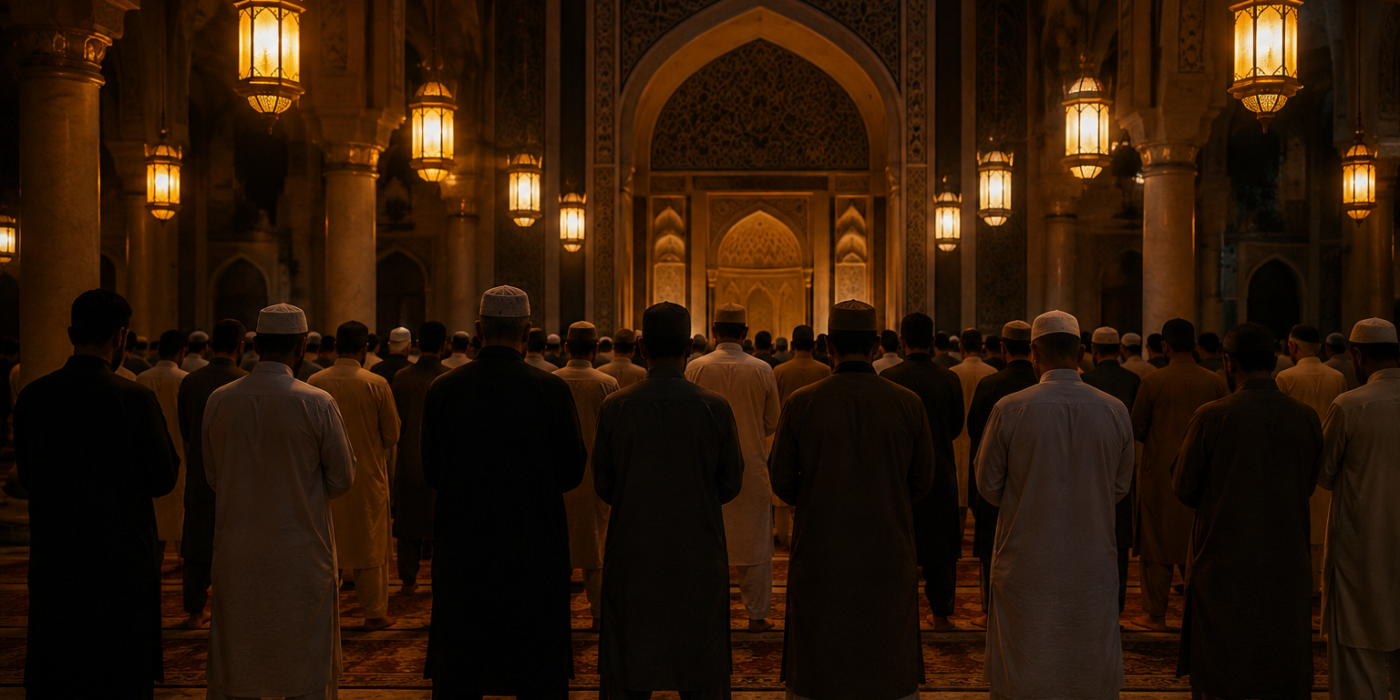
Taraweeh is a special voluntary night prayer performed specifically during Ramadan, after the Isha prayer. Unlike Tahajjud, which follows waking from sleep, Taraweeh is prayed immediately after Isha, typically in congregation at the mosque, and does not require having slept first.
Taraweeh vs. Tahajjud — The Real Differences
| Taraweeh | Tahajjud |
|---|---|
| Only during Ramadan | Any night of the year |
| Prayed right after Isha | Prayed after waking from sleep, later at night |
| Typically prayed in congregation | Typically prayed individually at home |
| Doesn’t require sleeping first | Specifically follows sleep |
Some scholars consider Taraweeh a specific form of Qiyam al-Layl (general night prayer) unique to Ramadan, while Tahajjud is the term more specifically used for the sleep-then-pray pattern observed the rest of the year, covered in detail in our Tahajjud article.
How Many Rak’ahs Is Taraweeh?
This is genuinely one of the most debated practical details among different schools of thought:
- 8 rak’ahs — followed by some, based on narrations describing the Prophet’s ﷺ own personal practice
- 20 rak’ahs — the practice widely followed in many mosques today, tracing back to a practice established during the time of Caliph Umar ibn al-Khattab
- Other counts exist in various communities and schools
Both positions are backed by legitimate scholarly reasoning, and Muslims are generally encouraged to follow the practice of their local mosque and community rather than treat this as a dispute worth dividing over.
Is Taraweeh Obligatory?
No — Taraweeh is a strongly emphasized Sunnah (Sunnah Mu’akkadah), not an obligatory prayer like the five daily prayers. The Prophet ﷺ reportedly limited how often he led it in congregation specifically out of concern it might become perceived as obligatory for his followers.
Why Taraweeh Is Prayed in Congregation
While Tahajjud is typically an individual, private prayer, Taraweeh’s congregational nature adds a communal dimension unique to Ramadan nights — often accompanied by completing a full recitation of the Quran (khatm) across the month, with a portion (juz) recited each night until the entire Quran is completed by Ramadan’s end.
Tips for Getting the Most Out of Taraweeh
- Try to understand the recitation, even briefly reviewing the meaning of the portion being recited that night
- Maintain focus (khushu) rather than treating it as a long prayer to get through
- Don’t skip nights over minor tiredness — consistency across the month is part of the value
- Combine it with the dua and istighfar covered in our other articles, since Ramadan nights are considered especially valuable for both
Frequently Asked Questions
Can I pray Taraweeh at home instead of the mosque?
Yes — while congregational prayer is encouraged and common, Taraweeh can be prayed individually at home, particularly for those unable to attend the mosque.
Can I pray both Taraweeh and Tahajjud in the same night during Ramadan?
Many scholars view Taraweeh and Tahajjud during Ramadan as essentially the same category of night prayer under different names — praying Taraweeh in the earlier night and additional voluntary prayer later doesn’t necessarily need to be treated as two separate obligations, though the details vary by scholarly opinion.
What if I miss a few nights of Taraweeh?
There’s no requirement to make up missed Taraweeh prayers — unlike obligatory prayers, missing a voluntary night’s Taraweeh simply means missing that night’s specific reward, not an ongoing debt to repay.
Conclusion
Taraweeh and Tahajjud share the same spiritual core — standing in extra prayer at night — but differ enough in timing, structure, and communal nature to be worth understanding separately, especially heading into Ramadan.
See our related pieces on Tahajjud and Ramadan fasting, and browse upcoming Islamic gatherings near you.