Umrah: Meaning, Rites, and How It Differs From Hajj
Quick answer: Umrah is the “lesser pilgrimage” to Makkah, voluntary and performable any time of year, consisting of Ihram, Tawaf, and Sa’i. Unlike Hajj, it’s not one of the Five Pillars and has no fixed dates, though many choose to perform it during Ramadan for its heightened reward.
What Is Umrah?
Umrah is a pilgrimage to Makkah involving a specific set of rites, shorter and simpler than Hajj, and voluntary rather than obligatory. It can be performed at any point during the year, standing in contrast to Hajj, which is restricted to specific days in Dhul-Hijjah and covered in more depth in our separate article on Hajj.
The Core Rites of Umrah
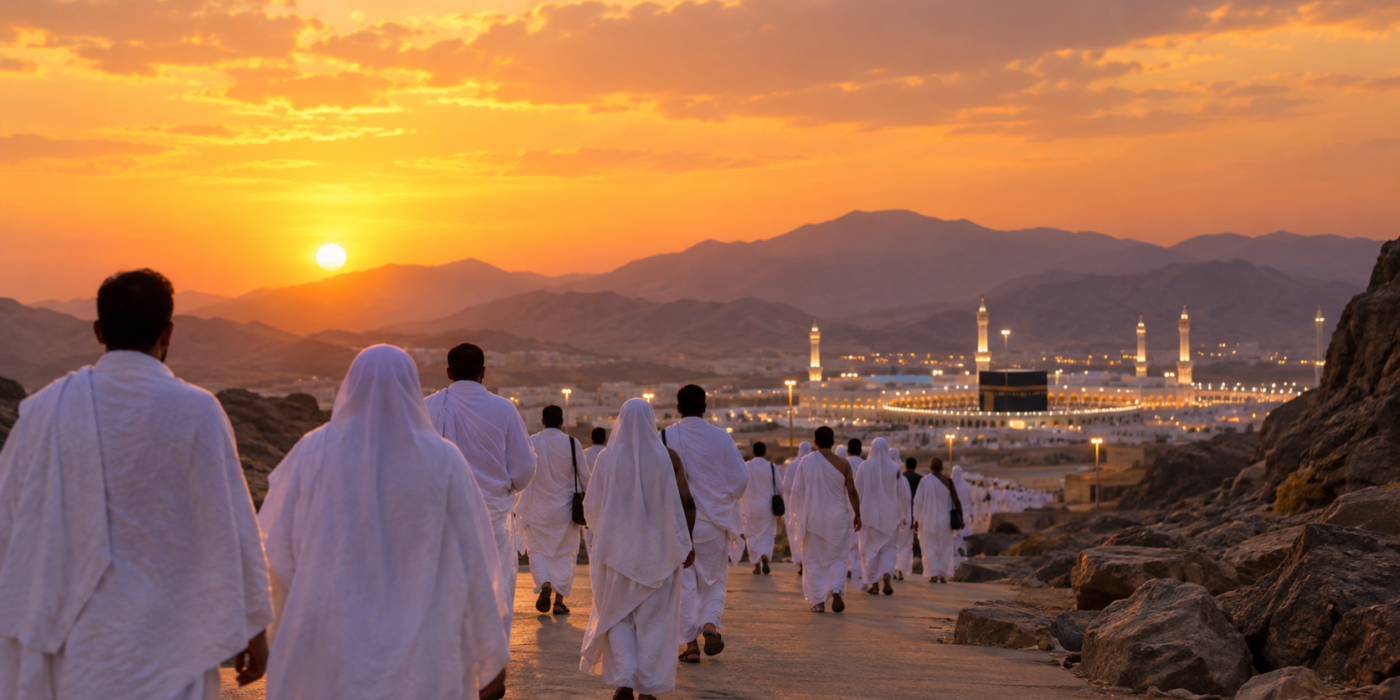
- Ihram. Entering a sacred state at a designated boundary point (Miqat), with intention and, for men, specific plain garments.
- Tawaf. Circling the Kaaba seven times.
- Sa’i. Walking between the hills of Safa and Marwah seven times.
- Halq or Taqsir. Shaving the head or trimming the hair, marking the completion of Umrah and exiting the state of Ihram.
That’s the entire ritual sequence. No standing at Arafat, no Mina, no Muzdalifah, no days of stoning. This is the core reason Umrah takes a fraction of the time Hajj requires.
Umrah vs. Hajj — Side by Side
| Umrah | Hajj |
|---|---|
| Voluntary | Obligatory once in a lifetime, if able |
| Any time of year | Specific days in Dhul-Hijjah only |
| Tawaf and Sa’i only | Includes Arafat, Mina, Muzdalifah, and more |
| Usually completed in a few hours | Spans several days |
| Not one of the Five Pillars | One of the Five Pillars |
Can Umrah Be Performed Alongside Hajj?
Yes. Pilgrims performing Hajj often combine it with Umrah, and there are three recognized approaches to doing so: Tamattu (Umrah performed separately, followed by Hajj later in the same trip, with Ihram removed in between), Qiran (both performed together under a single continuous Ihram), and Ifrad (Hajj performed alone, without a combined Umrah). Each carries slightly different requirements, including whether a sacrifice (Hady) is required.
Why Umrah During Ramadan Carries Special Weight
A well-known hadith describes performing Umrah during Ramadan as equivalent in reward to performing Hajj, or in some narrations, Hajj performed with the Prophet ﷺ specifically. This is a major reason Umrah bookings and demand surge dramatically during Ramadan every year, despite Umrah being available at any time.
Who Should Consider Umrah Before Hajj?
- Those who want to experience the rites of Makkah without the financial and logistical scale of Hajj
- Those still saving toward Hajj, who want to visit in the meantime
- Anyone seeking a shorter, more frequent way to visit the Haramain, since Umrah, unlike Hajj, can be repeated multiple times in a lifetime
Frequently Asked Questions
Is Umrah a requirement like Hajj?
No. The overwhelming majority of scholars hold Umrah as recommended (Sunnah) rather than obligatory, though some schools of thought consider it obligatory once in a lifetime for those able, distinct from the clear obligation of Hajj.
How long does Umrah typically take?
The rites themselves can be completed in a matter of hours for a well-prepared pilgrim, though most trips extend over several days to include additional worship, visiting Madinah, and rest.
Can Umrah be performed more than once during the same trip?
Yes. Some pilgrims perform multiple Umrahs during an extended stay, exiting the sacred precinct to a nearby Miqat point and re-entering Ihram to perform it again.
Do women need a mahram to perform Umrah?
Views differ among scholars on this point, with some requiring a mahram or safe travel arrangement and others permitting travel with a trusted group, similar to the broader discussion covered in our Hajj article.
Conclusion
Umrah offers a shorter, more accessible way to experience the sacred rites of Makkah, available any time of year rather than restricted to a single obligatory pilgrimage. For many, it becomes a recurring, deeply anticipated act of worship, not a one-time obligation to fulfill and move past.
See our related piece on Hajj, and browse upcoming Islamic gatherings near you.