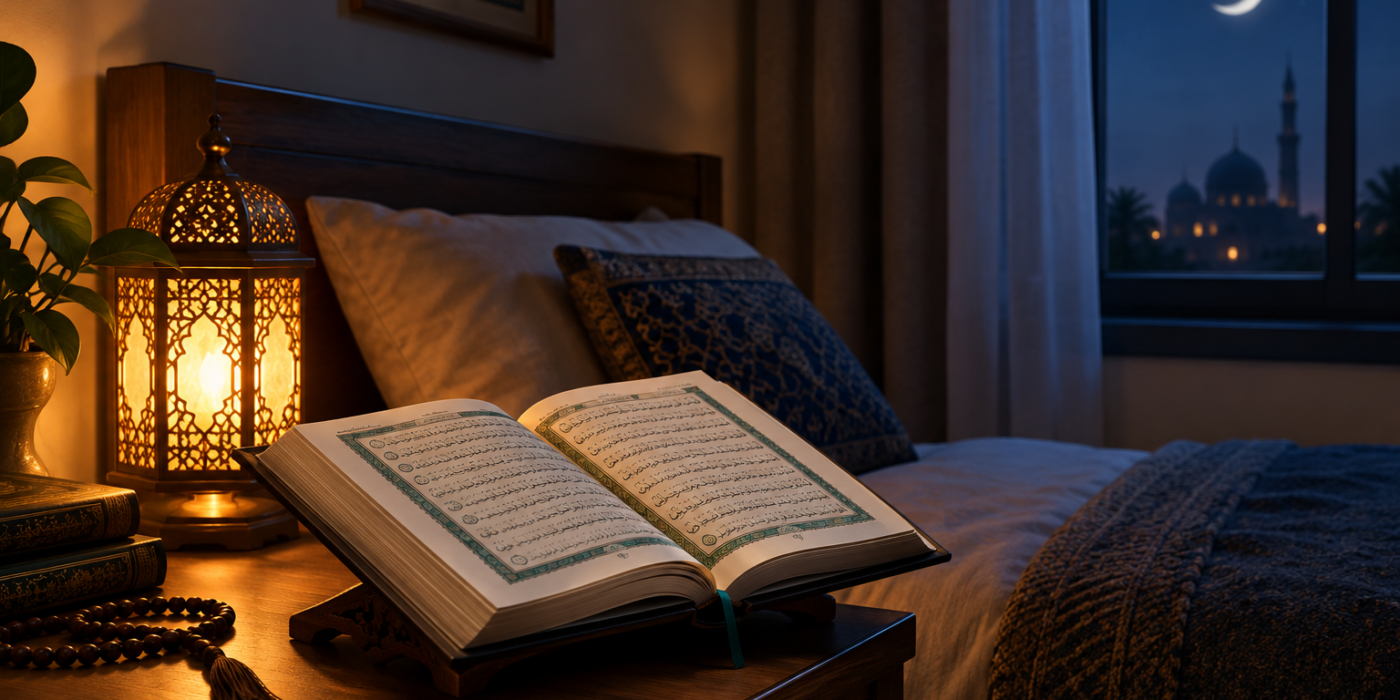
Surah Al-Mulk: Virtue, Meaning, and Protection From the Grave
Quick answer: Surah Al-Mulk is the 67th chapter of the Quran, recommended for recitation before sleep each night. Hadith describes it as a shield against the punishment of the grave, earning it the title “The Protector” among scholars.
What Is Surah Al-Mulk?
Al-Mulk (الملك), “The Sovereignty” or “The Kingdom,” is the 67th surah of the Quran, containing 30 verses. It opens by affirming Allah’s complete dominion over all creation and moves through reflections on death, the purpose of life, and the vastness of Allah’s creation, closing with a reminder about the source of provision and guidance.
Why It’s Recited Before Sleep
A well-known hadith describes the Prophet ﷺ not sleeping until he had recited Surah As-Sajdah and Surah Al-Mulk. This established practice is the primary reason the surah is so closely tied to the nightly routine for millions of people, alongside general Quran recitation before rest.
The Hadith on Protection From the Grave
Perhaps the most cited hadith connected to this surah describes it as a chapter of thirty verses that intercedes for its companion (the one who recited and reflected on it regularly) until they are forgiven. Another well-known narration describes it specifically as protecting its reciter from the punishment of the grave, which is why many scholars refer to it as Al-Waqiyah or Al-Mani’ah, “the protector” or “the preventer.”
Key Themes Within Surah Al-Mulk
- Allah’s absolute sovereignty. The opening verses establish that all dominion belongs to Allah alone, over life, death, and everything in between.
- The purpose of death and life. An early verse states directly that death and life were created specifically to test who among creation does the best deeds, framing the entirety of worldly life around this purpose.
- Reflection on creation. Several verses call the reader to look upward at the sky, and around at creation generally, as a direct invitation to find evidence of Allah’s power and precision.
- A warning to those who reject faith. The surah describes the regret of those who deny truth once consequences become undeniable, contrasted with those who feared Allah unseen.
- A closing reminder about provision. The final verses ask who could provide for creation if Allah withheld sustenance, tying the whole surah’s themes of sovereignty and dependence together.
How to Build the Habit of Nightly Recitation
- Pair it with your existing nightly routine, right before sleep, rather than treating it as a separate task to remember.
- Read the translation first if the Arabic alone doesn’t yet carry full meaning, since the themes of mortality and purpose are worth genuinely absorbing, not rushing past.
- Keep it consistent rather than only on nights that feel spiritually significant — the hadith describing its protection ties to regular practice, not occasional recitation.
Frequently Asked Questions
Is reciting Surah Al-Mulk before sleep obligatory?
No. It’s a Sunnah practice, strongly encouraged based on the Prophet’s ﷺ own established habit, but not an obligation the way the five daily prayers are.
What if I fall asleep before finishing it?
Completing what’s possible before sleep and continuing another night, or catching up the next day, is far better than abandoning the practice out of an all-or-nothing standard.
Does listening to it recited count the same as reading it myself?
Listening with genuine attention carries real value, though actively reciting it yourself, even slowly, is generally encouraged as the fuller form of the practice described in hadith.
Conclusion
Thirty verses, tied to one of the most specific and often-cited protective hadiths in the entire Quran, recited as the very last thing before sleep. Surah Al-Mulk turns an ordinary bedtime routine into something considerably more deliberate.
See our related pieces on Surah Al-Kahf and Surah Al-Fatiha, and check your local Namaz Times.